

A film studio website you walk into
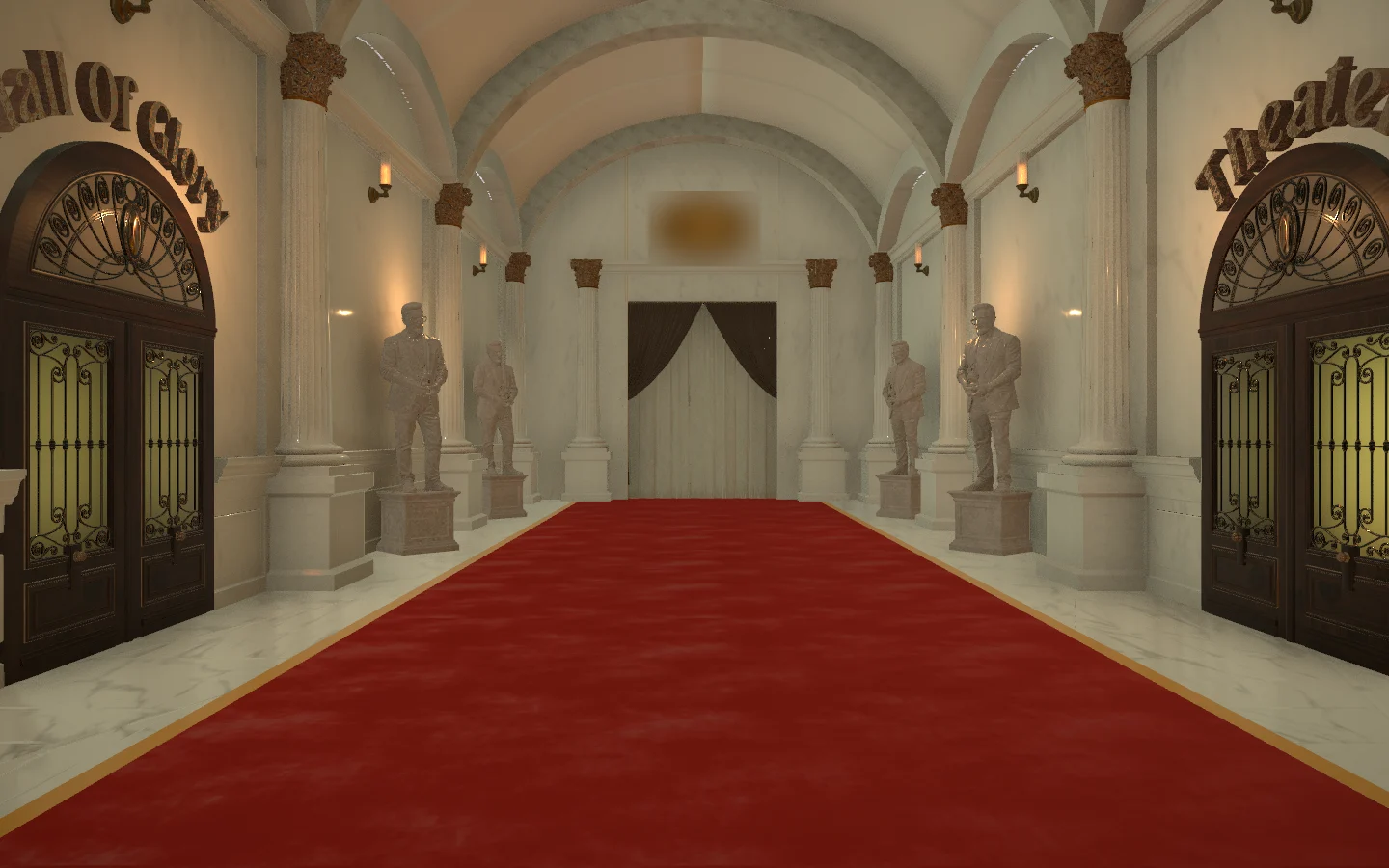
A website where visitors enter a real-time 3D theatre lobby, browse the studio's films on the walls and walk through doors into the rest of the site.
- Client
- Film production studio (name withheld)
- My role
- 3D, front end, back end, deployment
- Built with
- React, Three.js, React Three Fiber, NestJS, MongoDB, Redis, Docker
How it is built
01Visitor
- Intro video
- 3D lobby
- Doors into pages
02React Three Fiber
- Draco-compressed GLB
- HDRI lighting
- AgX tone mapping
- Ambient occlusion
03React app
- Films, cast, press
- Admin with rich text
- React Query
04NestJS API
- MongoDB
- Redis cache
- Image pipeline
- Docker deploy
The problem
A production studio wanted its website to feel like walking into a cinema rather than scrolling a brochure, and its team needed to keep films, cast, awards and press up to date without a developer.
What I built
- A 3D theatre lobby in React Three Fiber. Visitors click through the entrance, look around, scroll the studio’s films on the walls and walk through doors into other parts of the site.
- Day, afternoon and night lighting the visitor can switch between
- Pages for films, cast, behind the scenes, awards and press, managed from an admin panel with a rich text editor
- A NestJS API with MongoDB and Redis caching, shipped in Docker
The hard parts
A 40 MB room in a browser. The lobby model is Draco-compressed, and it starts downloading while the intro video plays. By the time the visitor clicks in, the room is usually already loaded.
Making it look like a room, not a game. Physically based materials, an HDRI environment, AgX tone mapping, ambient occlusion and a vignette give the lobby film-style lighting rather than flat 3D.
Posters that never stretch. Film posters come from the API in every shape. Each texture is cropped the way CSS object-fit: cover works, so a poster always fills its frame undistorted. Each poster loads inside its own error boundary, so one broken image cannot take down the scene.
Fixing the model in code. One exported mesh shipped with degenerate geometry that caused artefacts. Rather than send it back through the 3D tool, the loader strips the broken part as the model loads.