

A medical travel platform in 18 languages
Qonaq Health connects international patients with hospitals, doctors and wellness retreats. I built and run the whole platform, from server-rendered pages in 18 languages to payments, video consultations and caching.
- Client
- Qonaq Health
- My role
- Full-stack development and hosting
- Built with
- Angular SSR, NestJS, MongoDB, Redis, Razorpay, Agora, Sentry
- Live site
- www.qonaqhealth.com
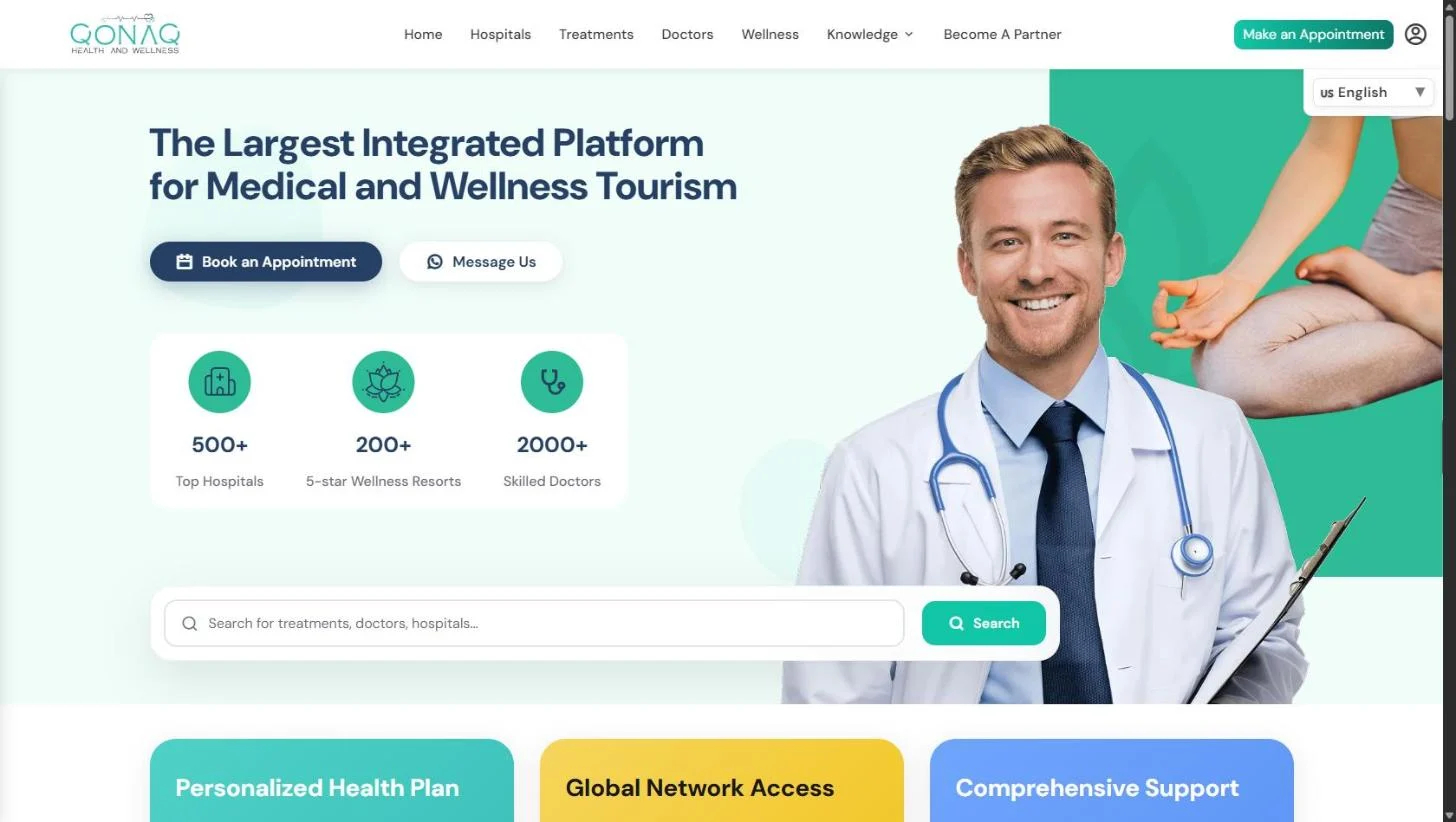
18
languages, each with its own indexable pages
176
hospitals listed across countries and cities
3
portals in one system: patients, doctors and admin
How it is built
01Patients, doctors, admins
- Web, 18 languages
- Doctor portal
- Admin panel
- Video consults
02Angular SSR
- Prerendered static pages
- Server-rendered listings
- Translations from disk
- Language-prefixed routes
03NestJS API
- Role permissions
- Razorpay webhooks
- Domain events
- Agora tokens
04Data and ops
- MongoDB
- Redis cache
- Sentry
- Staging and production
The problem
Qonaq Health helps people from other countries find treatment abroad: the right hospital, the right specialist, a visa and a place to recover. A patient in Uzbekistan or Somalia has to be able to read every page in their own language, and Google has to find a page like “cardiology hospitals in Istanbul” in Russian as easily as in English.
What I built
- Listings for hospitals, doctors, treatments and retreats, with treatments nested under parent treatments and filters by department, country and city
- A doctor portal where doctors manage their profiles and read reports patients upload, and video consultations on Agora
- An admin panel with fine-grained permissions for every content type, from hospitals and blogs to payment links and coupons
- Payments with Razorpay, confirmed by webhook, and a medical visa module with lead capture
The hard parts
Search engines and 18 languages. Every language has its own URL prefix, and English has none. Pages that rarely change are prerendered for every language at build time; listings are rendered on the server per request. Every page reaches the browser as finished HTML.
Keeping SSR alive under a bot attack. During a bot attack, the server-side render was fetching its own translation files through Cloudflare and got caught in the challenge pages, which crashed the renderer in a loop. I moved translation loading on the server to read straight from disk, so the renderer no longer depends on its own public URL.
Fast listings without stale data. API responses are cached in Redis with a time-to-live set per route, and a cache invalidation service clears cached responses when content changes, so edits show up without waiting for the cache to expire.
Payments confirmed by the provider. Razorpay webhooks confirm each payment on the server and raise an event, such as a paid payment link or a booked retreat, which the rest of the system handles separately.
How it runs
Staging and production are deployed separately, errors are tracked in Sentry on both the API and the front end, and data changes ship as migrations. I have run the platform since launch under a maintenance agreement and keep adding modules as the business grows.
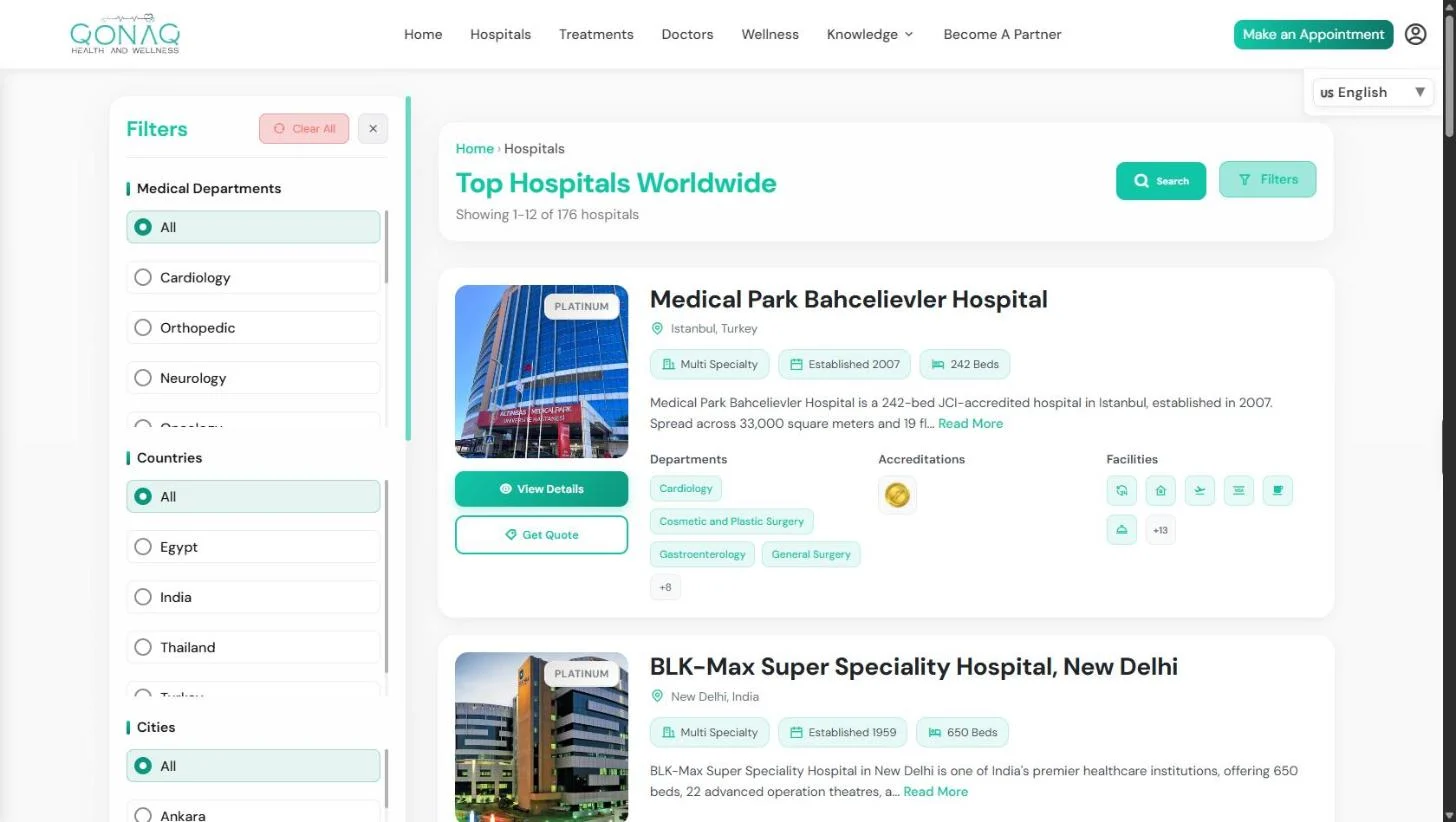
Hospital search with filters by department
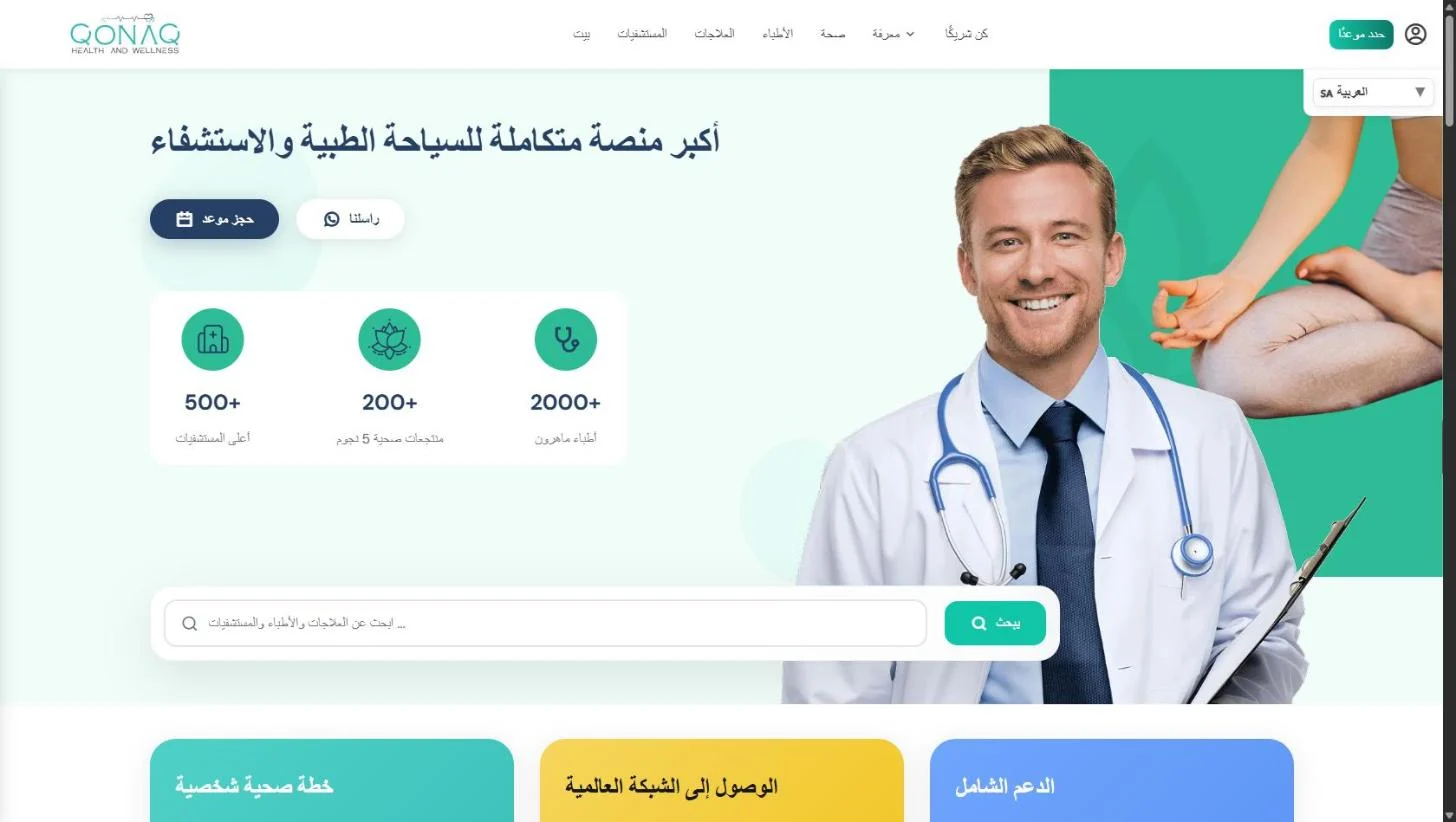
The same home page in Arabic